5-Panel vs 6-Panel Caps: How Structure Changes Fit and Logo Placement
Compare five-panel and six-panel caps, structured and unstructured crowns, profile heights, visors and closures before approving a custom cap sample.
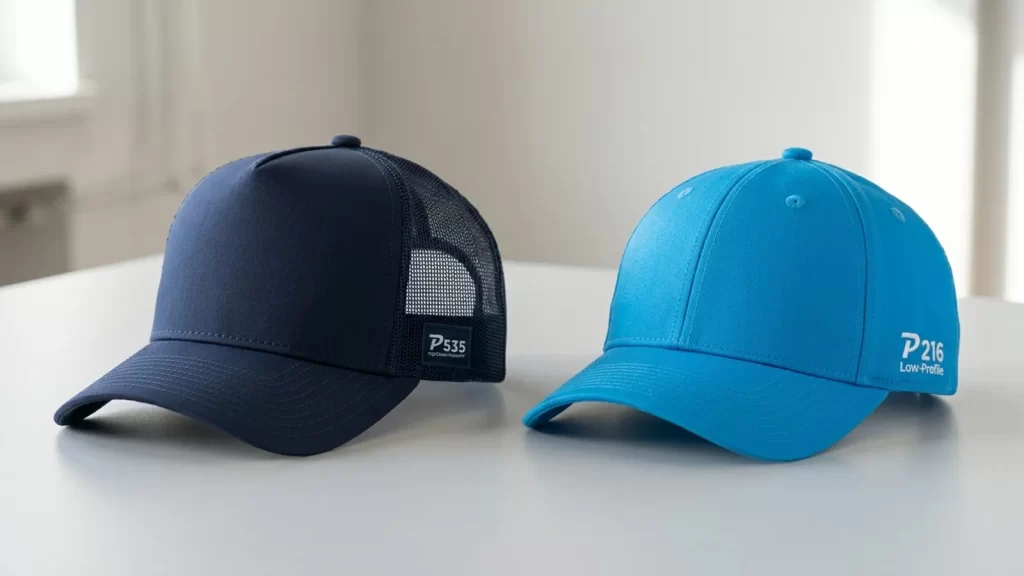
A five-panel cap is not automatically better than a six-panel cap, and a structured crown is not automatically higher quality than an unstructured one. These choices control the silhouette, the way the cap follows the head and the space available for a logo. The practical approach is to choose the shape for the wearer and use case first, then test the artwork on a physical sample.
This guide helps buyers turn a visual preference into a clearer custom-cap brief. It compares panel layout, front support, crown height, visor shape and closure without treating any one combination as universal. Exact fit still depends on the pattern, material, components and size—not only the number of panels.
Quick answer: start with the front of the cap
| Decision | What changes | What the buyer should check |
|---|---|---|
| Five-panel or six-panel | Front seam layout and crown geometry | Whether the artwork crosses a seam and how the crown looks from front and side |
| Structured or unstructured | Front support and how firmly the crown holds its shape | Whether the decoration weight and desired hand feel suit the support |
| Low, mid or high profile | Crown depth, visible front height and overall silhouette | Target wearer, reference cap and worn sample—not measurements alone |
| Flat, slightly curved or pre-curved visor | Face framing and the character of the style | The complete side profile after the cap is worn |
| Adjustable or fitted sizing | Rear appearance and fit range | Head-size range, opening shape, components and recovery where relevant |
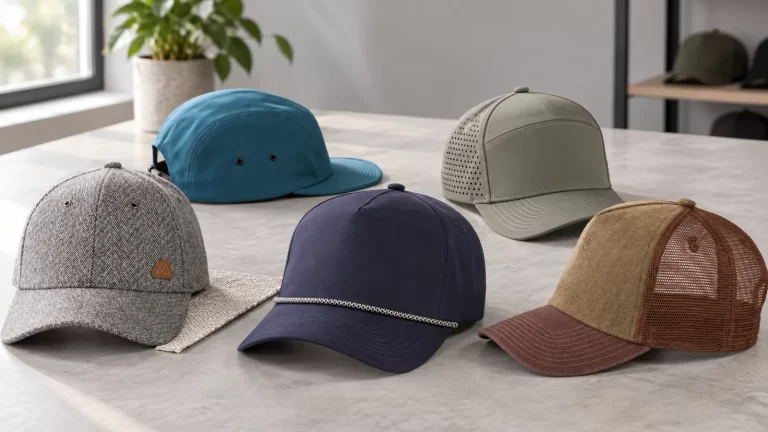
Panel count is therefore one decision within a system. Two five-panel caps can feel very different if one is a low, soft camper cap and the other is a structured, higher-crown trucker. The same is true of two six-panel caps built with different profiles, fabrics or front support.
Five-panel vs six-panel caps: what actually changes?
Five-panel caps can provide a less interrupted front
Many five-panel patterns use a front layout without a vertical seam through the center of the main decoration area. That can make it easier to position a wide graphic, patch or print. Five-panel construction is not one fixed silhouette: it appears in camper caps, trucker caps, performance styles and higher-profile fashion shapes.
The pattern still matters. Front darts, joining seams and panel proportions vary, so buyers should request a front and side view of the proposed shape before locking the artwork.
Six-panel caps create the familiar segmented crown
A six-panel cap normally has a center seam at the front and forms a rounded, segmented crown. This construction is common across baseball-inspired, golf, outdoor, uniform and mesh-back styles. It can support many decoration methods, but small lettering or narrow details should not be placed across the center seam without a production test.
Neither layout indicates quality by itself. Sewing accuracy, material behavior, pattern balance, support, decoration and finishing determine whether the final cap meets the approved specification.
Structured vs unstructured: choose the intended silhouette
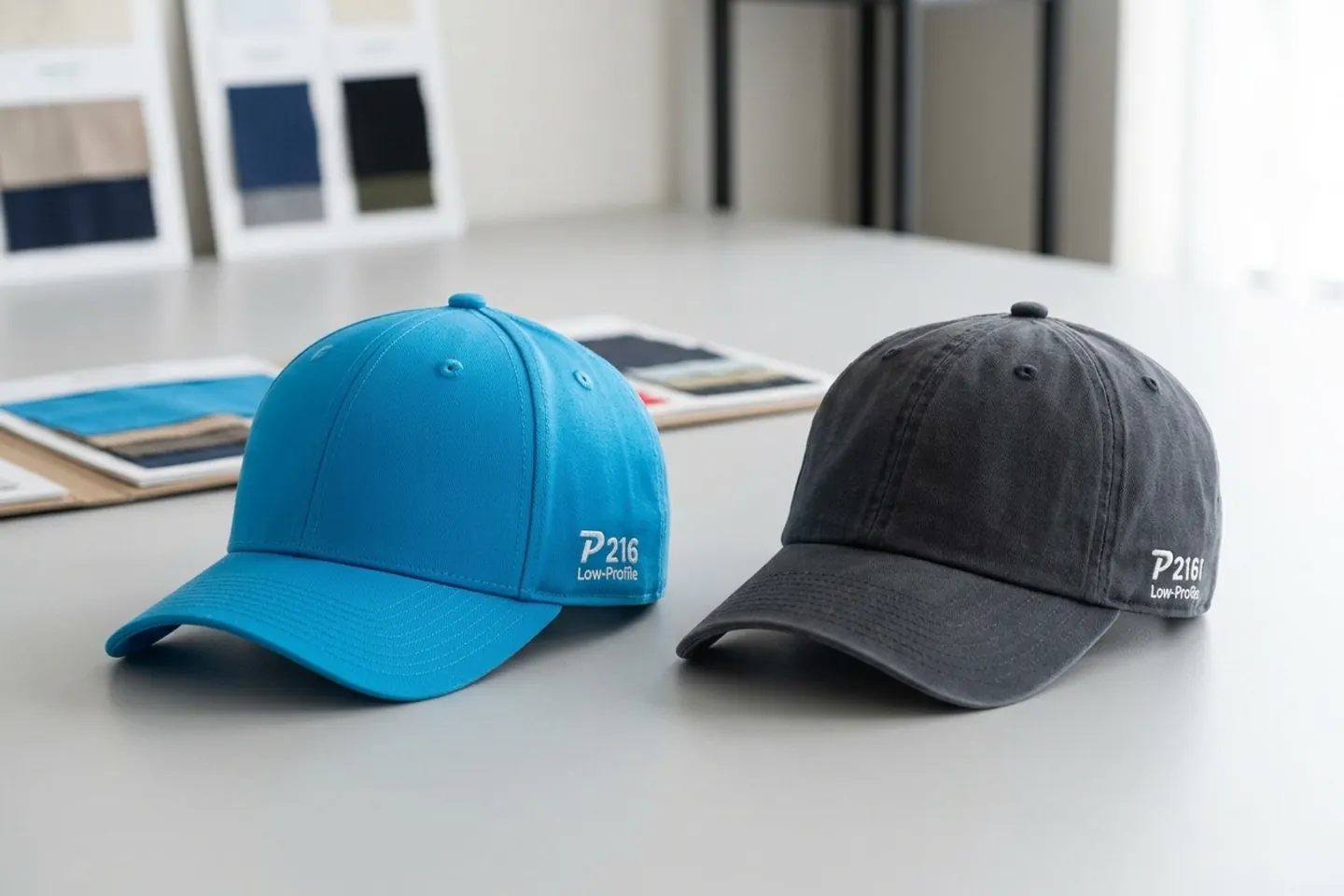
A structured cap uses support in the front crown to help it retain a defined form when it is not being worn. This can create a cleaner, more upright surface for embroidery or patches. An unstructured cap uses less front support and tends to follow the wearer’s head more closely, producing a softer and more relaxed appearance.
- Consider a structured front when the brief calls for a defined retail silhouette, a more upright crown or decoration that benefits from a stable surface.
- Consider an unstructured front when the intended look is soft, relaxed or packable and the decoration can work with the way the fabric drapes.
Support must be reviewed together with the shell fabric and decoration. A dense patch can change the hand and drape of a soft crown; a lightweight fabric may also behave differently after support is added. These interactions are best resolved during sampling rather than from a digital mockup.
The blue P216 and charcoal P216I development references provide a direct comparison within a related shape family: P216 is structured, while P216I is unstructured. The images help isolate the effect of front support, but the final feel and shape still need to be approved on the specified material and physical sample.
Crown profile changes both appearance and fit
Profile describes the height and fullness of the crown, but terms such as “low,” “mid” and “high” are only useful when tied to a specific pattern or physical reference. A higher crown generally creates a more prominent front and a stronger silhouette. A lower profile sits closer to the head and usually produces a quieter shape. It does not follow that one height will fit every market better.
| Profile direction | Typical visual result | Sampling question |
|---|---|---|
| Lower profile | Closer to the head; more compact front | Does the crown still provide enough depth and decoration space for the intended wearer? |
| Mid profile | Balanced height between compact and upright | Does the side view match the reference style after the visor is set? |
| Higher profile | More visible front height and a stronger outline | Does the crown stand as intended without overwhelming the wearer or artwork? |
| Specialized profile | Camper, golfer, trucker or other pattern-specific character | Are the panel geometry, depth and front angle approved as a complete shape? |
The MasterCap Shape & Fit Guide shows current reference shapes, including panel count, construction, visor and closure information. Use it to shortlist two candidates, then compare physical samples on the intended wearer group. A model number should identify a reference shape; it should not replace a worn-fit review.
The visor, closure and size complete the fit
The crown cannot be judged in isolation. A flat visor can make the same crown feel more fashion-led or upright, while a pre-curved visor changes the side profile and the way the cap frames the face. Visor length, stiffness and edge construction also contribute to the finished look.
The closure affects adjustability and the rear view, but an adjustable back does not make the crown universally sized. Buyers should define the intended head-size range, market and wearer before sampling. For fitted or stretch-fit concepts, size assortment and recovery require particular attention. The Headwear Size Chart is a planning reference; the approved physical sample remains the practical fit standard.
Match logo placement to seams, curve and support
Artwork that looks balanced on a flat screen can change once it follows a curved crown. Before approving the design, place the logo on the selected shape at its intended production size and review it from normal viewing distance.
- Keep critical letters and fine details away from a center seam unless a tested result shows they remain clear.
- Check whether a wide mark suits the available front panel rather than scaling it down until it loses impact.
- Compare decoration weight with crown support and shell fabric.
- Review tall logos against the usable crown height, including the curve toward the visor.
- Approve placement on a worn sample, not only on a cap lying flat.
Once the shape is shortlisted, compare embroidery, patches, printing and other branding directions in the MasterCap Decoration Guide.
Two MasterCap product examples to compare
Product examples are most useful when they show how several decisions work together. The following two pages provide real reference combinations; they are not prescriptions for every project.
Five-panel reference
The P915 five-panel golf rope cap combines a structured mid pro-high crown, slightly curved visor and adjustable snapback. Its product page is a useful reference for an uninterrupted front area and a more upright five-panel profile.
Six-panel reference
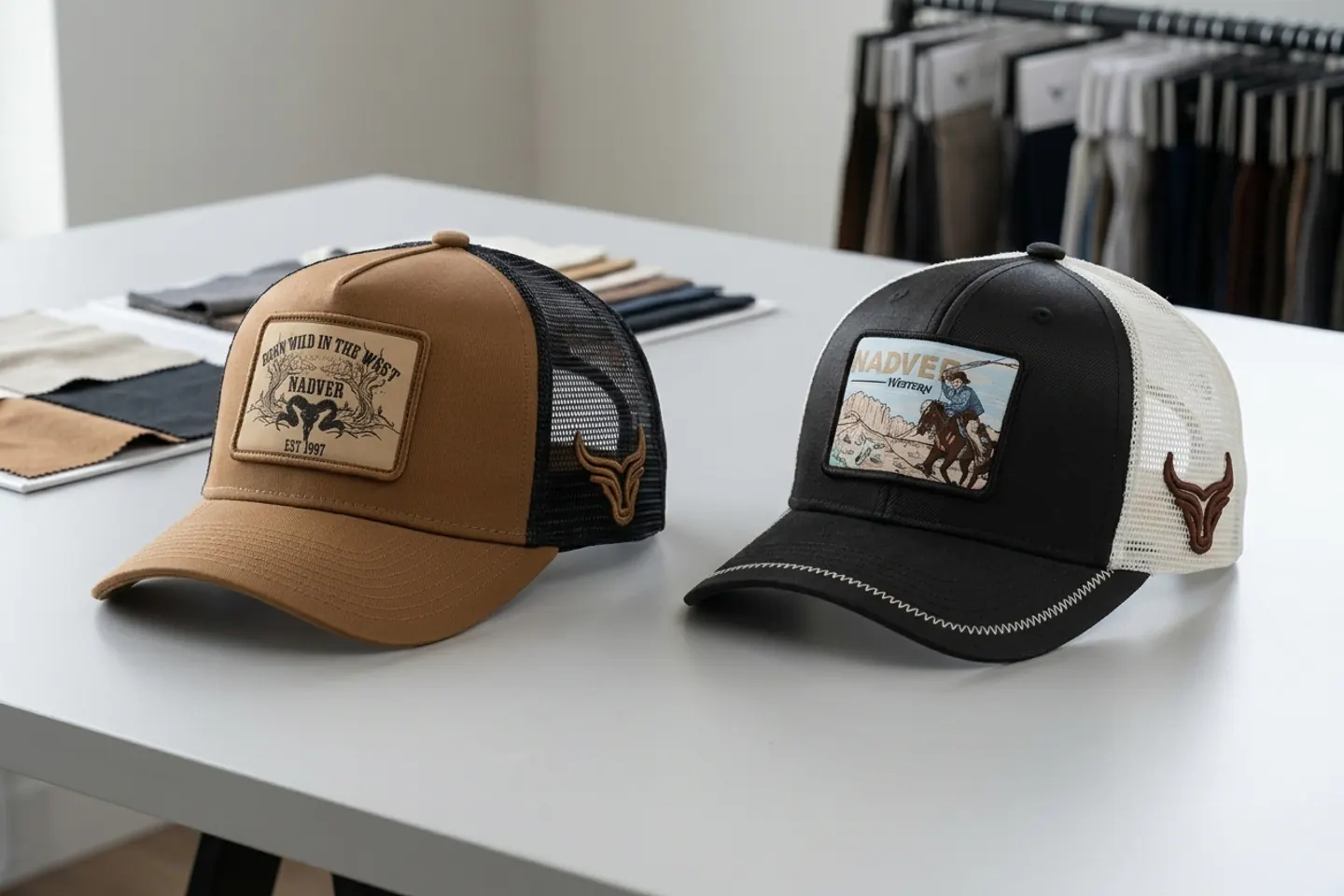
The western six-panel trucker cap shows a segmented crown with a front center seam, curved visor, structured cotton front and mesh back. Review how the decoration sits in relation to the seam and crown curve.
What to put in the sample brief
- Target wearer, market and use case.
- A reference cap or clear front, side and rear images.
- Preferred five-panel or six-panel layout, with the reason for the choice.
- Structured or unstructured front.
- Preferred crown profile and depth.
- Visor shape, curve and stiffness direction.
- Closure and required head-size range.
- Shell fabric, mesh, lining and sweatband direction.
- Logo artwork, production dimensions, placement and decoration method.
- Required colors, quantity, destination market and target schedule.
If the shape is still open, shortlist two profiles from the Shape & Fit Guide and explain what you like about each. MasterCap can then review the brief against the available development references before the first sample. For a new project, send the comparison and artwork through the contact page.
Frequently asked questions
Is a five-panel cap better for a large logo?
It can be helpful because many five-panel patterns do not place a vertical seam through the center of the main front area. The usable space still depends on the exact pattern, crown curve, darts, fabric and decoration method.
Can a six-panel cap carry front embroidery?
Yes. Six-panel caps commonly use front embroidery. The artwork should be digitized and positioned with the center seam, crown curve and intended size in mind; fine details that cross the seam should be tested.
Does unstructured mean lower quality?
No. It describes a softer construction direction, not a quality grade. Quality should be evaluated against the approved materials, pattern, sewing, measurements, decoration and finishing.
Which crown height is the safest choice?
There is no universal safest height. A mid profile can be a useful comparison point, but the best choice depends on the intended wearer, visual direction and decoration. Compare physical samples rather than approving a profile label alone.
Can one logo file be used on both five-panel and six-panel caps?
The core artwork may be reusable, but production size, placement or digitizing may need to change. Each cap shape should be reviewed as a separate application.
MasterCap references used for this guide
Shape & Fit Support
Not sure which crown profile fits your market?
Share a reference cap, wearer profile and intended use. MasterCap can help compare suitable panels, crown heights, visors and closures before sampling.