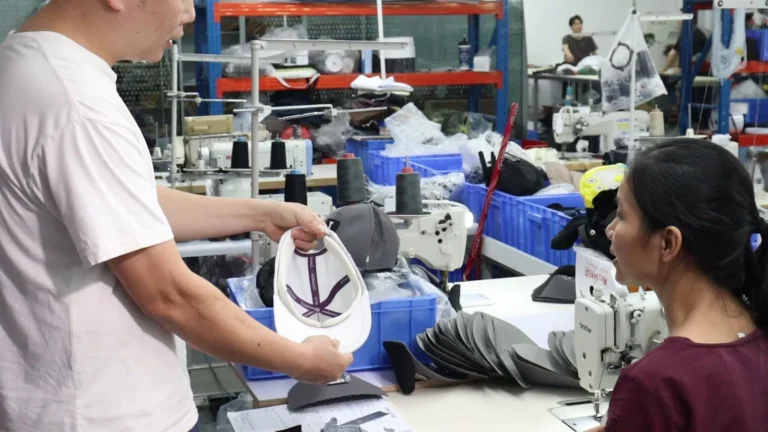
Custom Winter Caps With Ear Flaps: A Buyer’s Style & Material Guide
Compare winter baseball caps, trapper styles, ear-flap constructions, linings and closures. Use the buyer checklist before sampling custom winter caps.
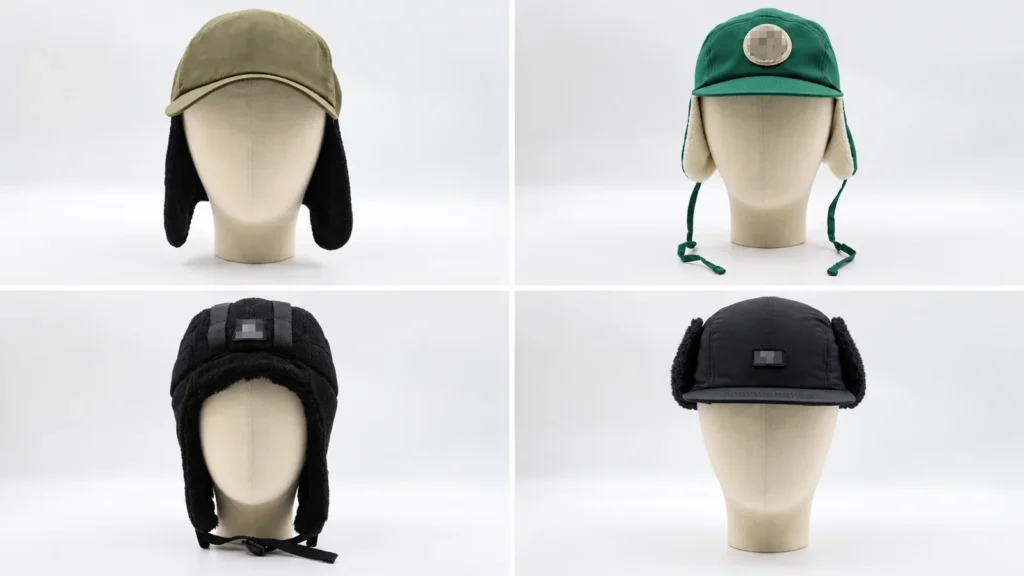
Choose a custom winter cap by the wearer’s activity, required ear and neck coverage, shell-and-lining system, fit and decoration—not by style name alone. A winter baseball cap with fold-down panels serves a different brief from a padded trapper-style cap. Give the supplier reference views, wearing modes and measurable requirements, then approve the complete physical sample.
This guide is for brands, uniform programs, distributors and promotional-product buyers developing structured cold-weather headwear. It focuses on billed caps with ear flaps or extended panels rather than knitted beanies. The five MasterCap reference styles shown below are current development directions. Exact materials, colors, decoration, MOQ and schedule are still confirmed for each proposed order.
What are winter hats with ear flaps called?
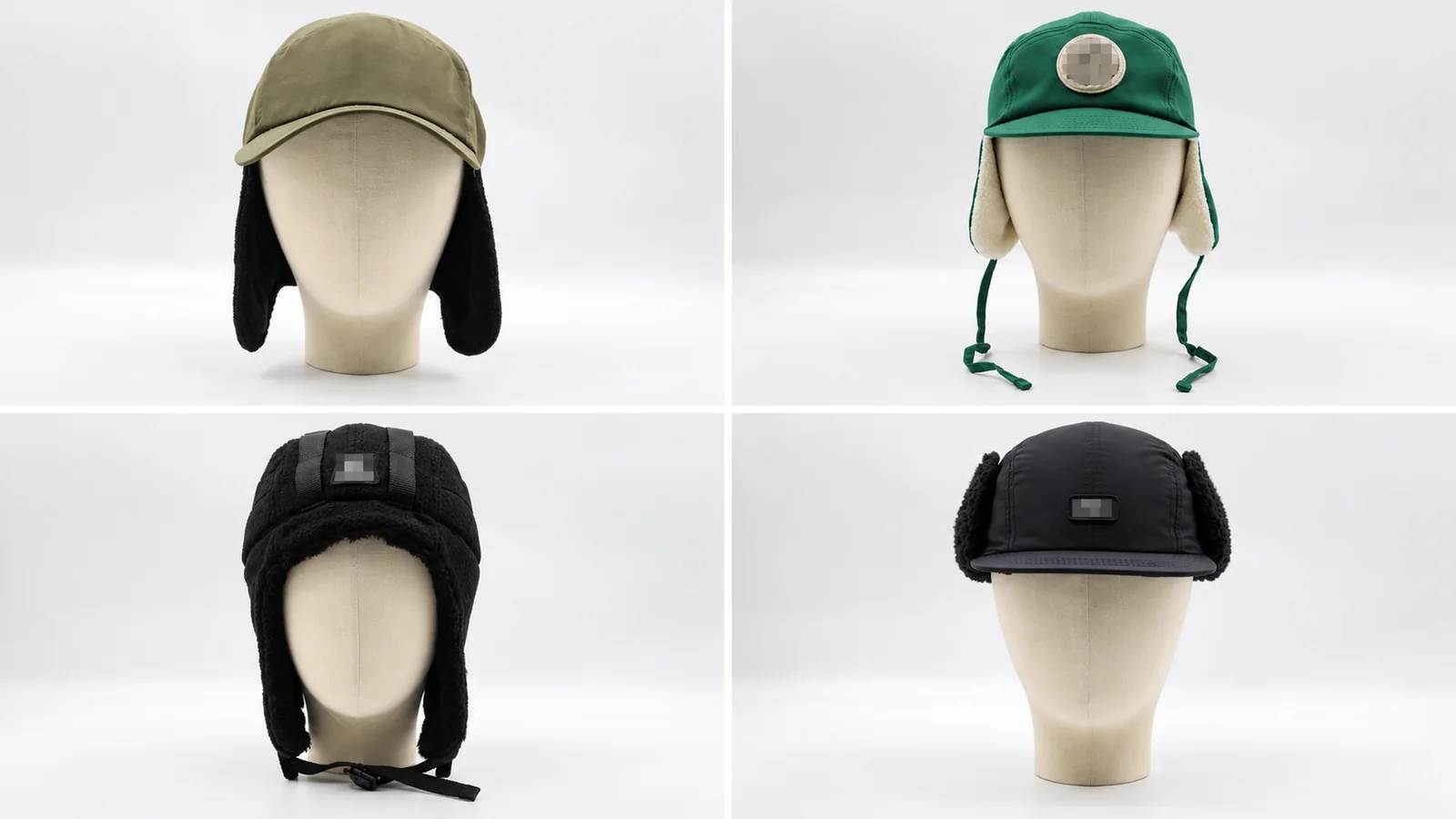
Common names include winter baseball cap with ear flaps, ear-flap cap, trapper hat, aviator-style cap and, for some fur-lined shapes, ushanka-style hat. These terms overlap and suppliers may classify the same construction differently. A name is useful for search, but it is not precise enough for an RFQ or purchase order.
Describe the visible shape and the wearing modes instead. State whether the product has a curved or flat visor, a baseball-cap crown or padded crown, separate ear flaps or one continuous ear-and-neck panel, and a tie, drawcord, buckle, snap or other closure. Include front, side, back, inside and flap-up/flap-down reference views. If the crown profile is still open, use the Shape & Fit Guide as a starting point.
Compare five custom winter-cap constructions
| Market-facing style name | Useful when the brief prioritizes | What the sample must resolve |
|---|---|---|
| Curved-Brim Winter Baseball Cap with Fold-Down Ear & Neck Flap | A familiar baseball-cap appearance with optional cold-weather coverage | How the panel stores, back-neck coverage, bulk around the sweatband and appearance in both wearing modes |
| Winter Baseball Cap with Ear Flaps and Chin Drawcord | More adjustable coverage and a visible outdoor direction | Flap length, drawcord position, chin comfort, hardware and how the cord behaves when not in use |
| Plush-Lined Winter Baseball Cap with Ear Flaps | A tactile seasonal look and softer contact around the ears | Pile direction, edge thickness, seam comfort, shedding or appearance requirements and logo clearance |
| Padded Trapper / Aviator Hat | Greater head and side coverage with a clearly insulated visual language | Panel bulk, crown balance, closure position, field of vision, hearing clearance and size grading |
| Flat-Brim Winter Cap with Fold-Down Ear Band | Streetwear styling combined with a concealed or convertible winter feature | Band depth, folding line, visor interaction, pressure around the head and appearance when raised |
No direction is automatically “warmest.” Coverage, air gaps, fit, material construction and the complete lining system matter, and any comparative warmth or weather claim needs an agreed test or evidence basis. Start with the intended wearer and environment, then shortlist the construction that can be sampled against that brief.
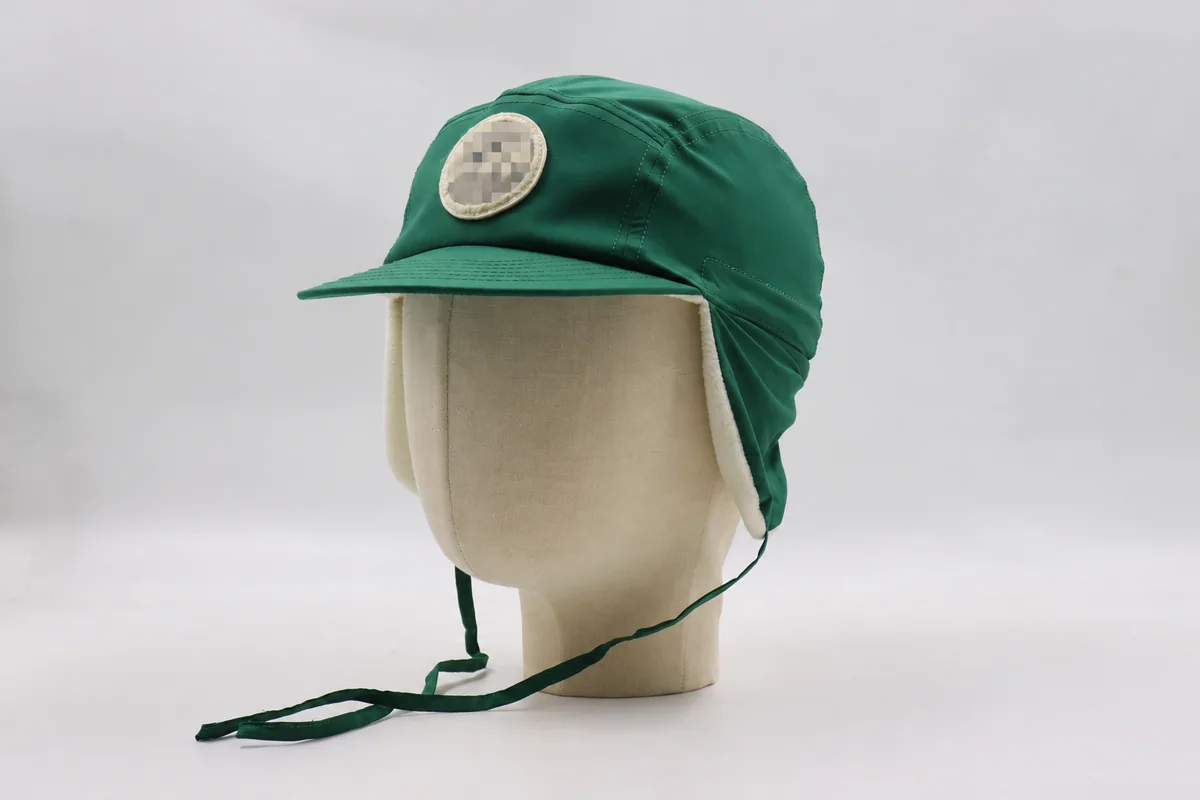
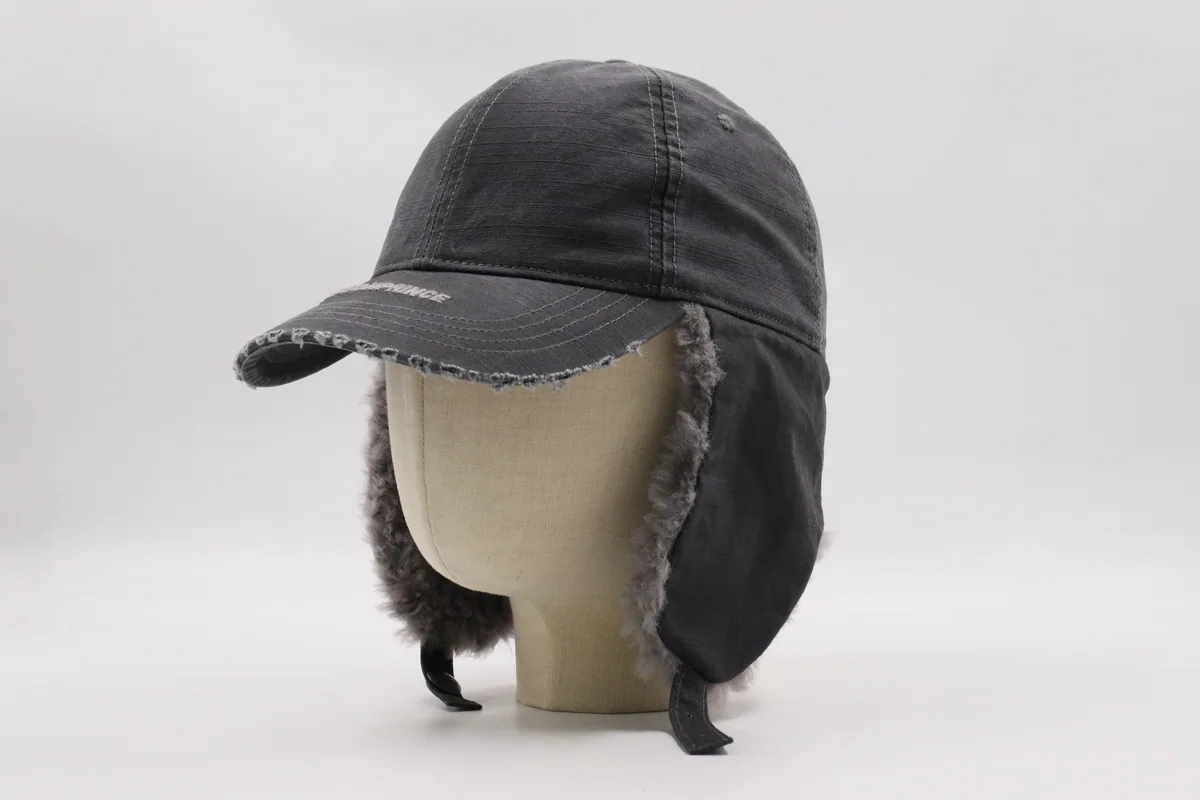
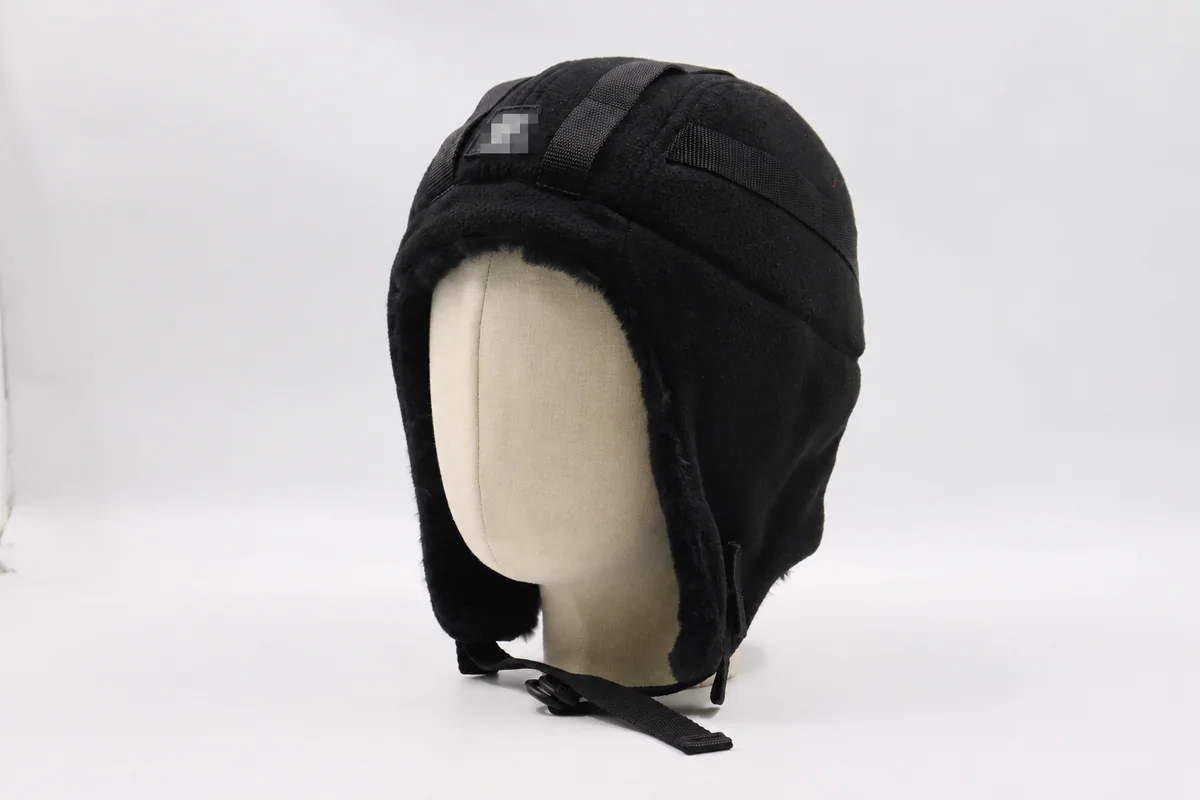
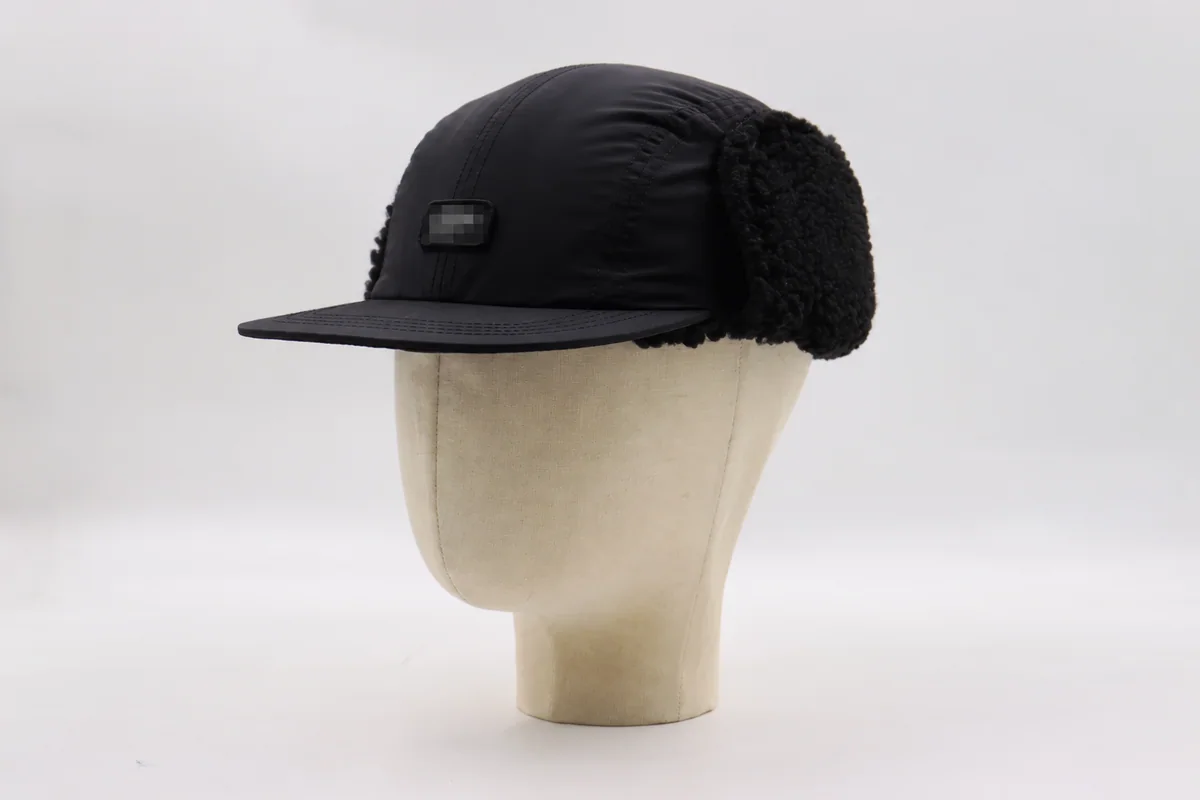
Specify a winter cap as a shell-and-lining system
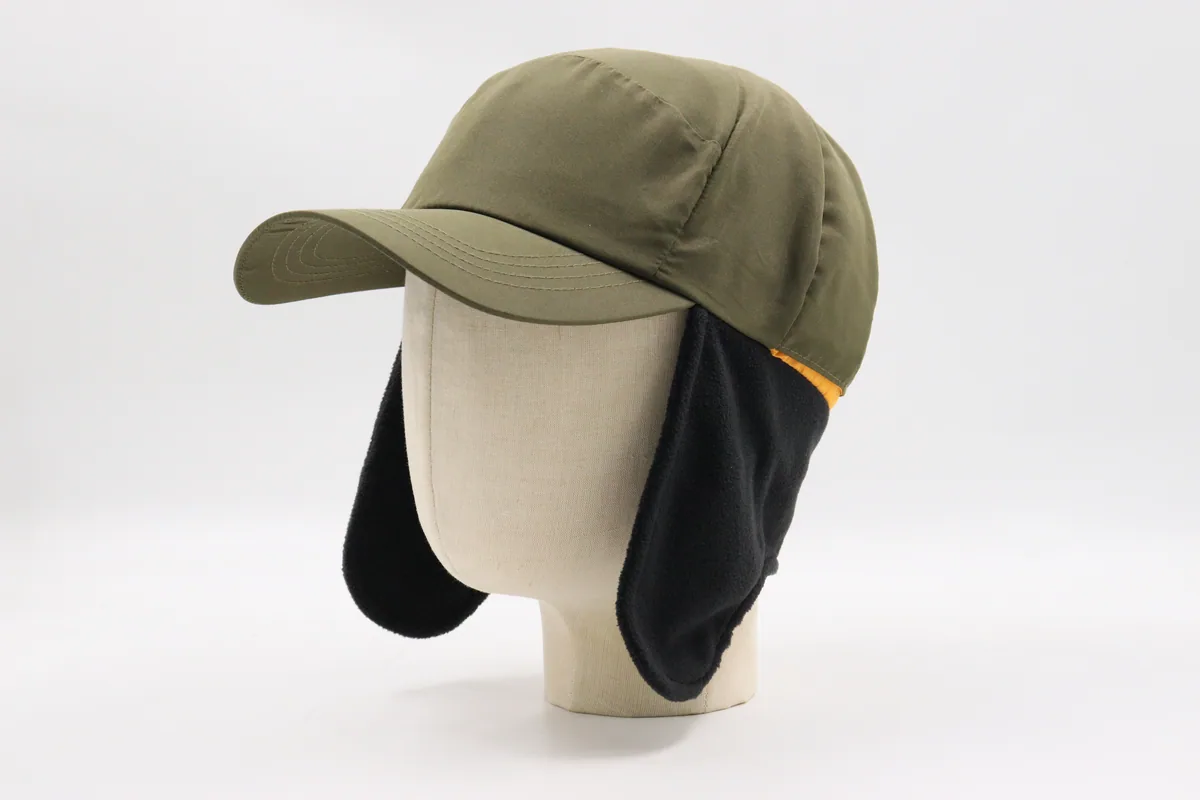
A winter-cap specification may combine an outer shell, optional padding or insulation, an interior lining, a sweatband, ear or neck panels, and closure components. Each layer affects bulk, sewing, fit and decoration. The fibre name by itself does not establish warmth, wind resistance, water resistance, breathability or durability.
MasterCap can develop these five style directions with project-selected outer shells, linings, padding and closure approaches. The exact combination should be agreed against the reference sample, intended use and destination requirements before production.
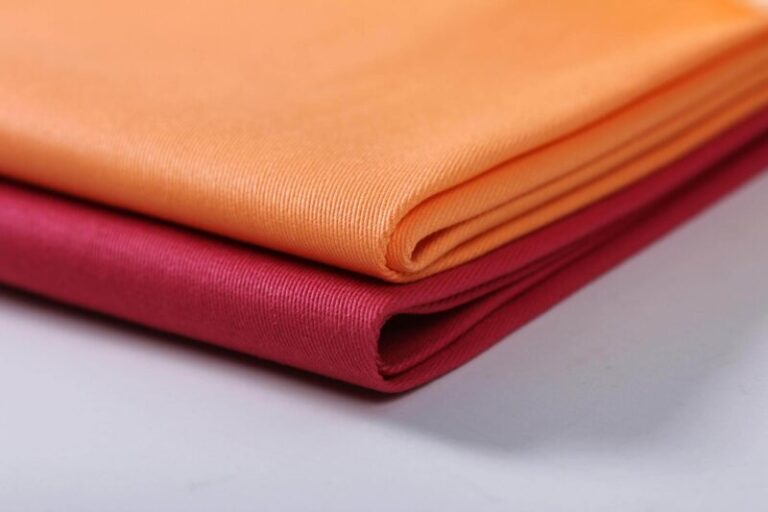
- Outer shell: approve exact composition, construction, weight, color, surface, finish and hand feel. If a weather-related claim is planned, define the component, test method and required result.
- Padding or insulation: record the material, placement and thickness rather than asking only for a “warm” cap.
- Lining: compare hand feel, pile or knit construction, thickness, color, seam exposure and care requirements on the finished sample.
- Sweatband and internal seams: inspect how added layers change pressure, comfort and the usable head opening.
- Ear and neck panels: define their pattern, lining, finished dimensions and attachment to the crown.
- Closure and hardware: identify contact points, adjustability, storage position and any destination-market requirements.
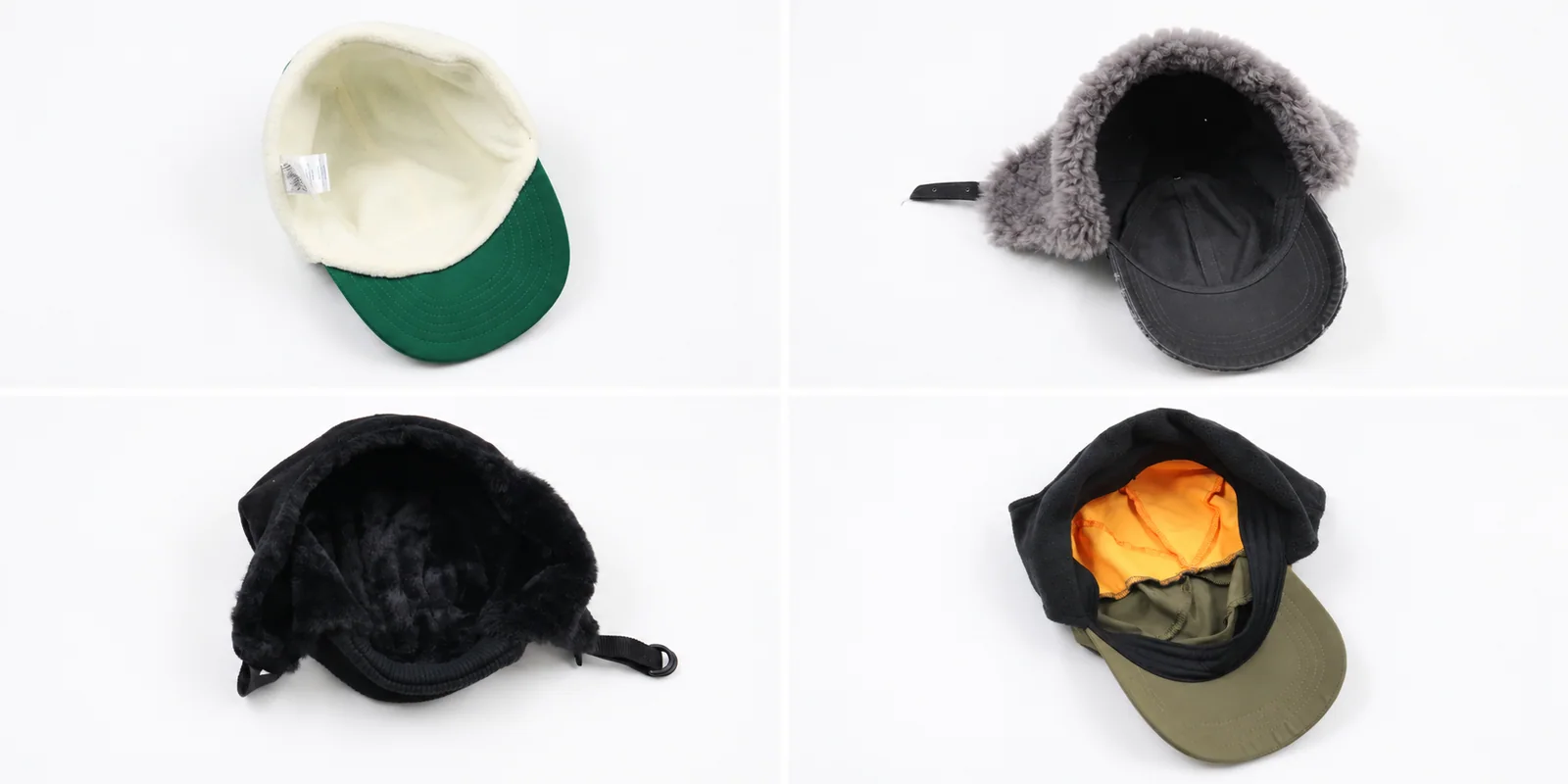
The Custom Cap Materials Guide explains why material names must be tied to a physical reference and specification. MasterCap’s Fabric & Yarns page can provide visual directions, but the project team must confirm which options and evidence apply to a particular winter-cap brief.
Fit changes when the cap adds lining and ear coverage
Do not reuse an unlined summer-cap size specification without reviewing the added layers. A thick lining or fold-down band can reduce the effective head opening, change crown depth and create pressure around the temples. Long flaps may improve coverage but can interfere with eyewear, collars or hearing unless their shape is tested on the intended wearer.
- Record head circumference, crown depth and the intended size range.
- Measure ear-flap length and width from fixed construction points.
- Define how far the back panel should cover the neck.
- Photograph the sample from front, side and back with panels both raised and lowered.
- Check whether the closure sits comfortably under the chin or behind the head.
- Review the cap with likely eyewear, collars or other equipment if the use case requires them.
- Confirm the measurement method and tolerances in writing before bulk production.
Plan decoration around padding, seams and fold lines
Winter-cap decoration depends on artwork, size, placement, shell construction, panel thickness and access to the decoration area. Dense embroidery can stiffen a soft or padded panel. Fine details may lose clarity on a pile surface. A patch can provide a defined logo edge, but its attachment and position still need to avoid fold lines, bulky seams and closure movement.
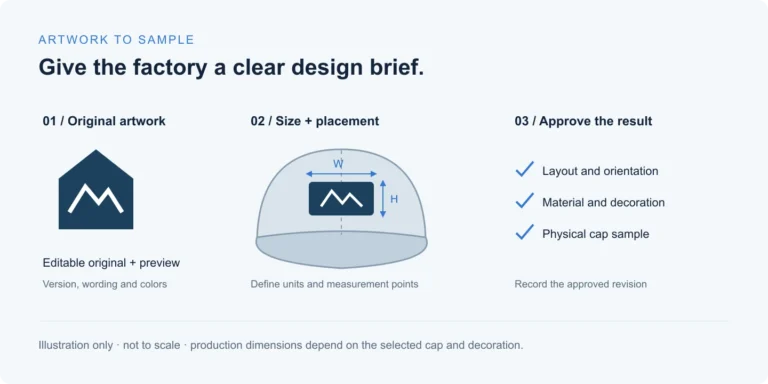
- Provide production-size artwork and the intended viewing direction.
- Mark placement on the correct wearing mode, not only on a flat pattern.
- Check the back of embroidery against the lining and wearer-contact areas.
- Confirm whether decoration is applied before or after particular assembly steps.
- Approve logo position with the flaps both up and down.
- Inspect puckering, distortion, show-through, edge lifting and seam interaction.
Use the Custom Cap Decoration Guide to compare process families, then approve the chosen combination on the actual winter-cap material and construction.
Use one sample to answer the complete wearing question
A material swatch cannot settle fit, coverage or comfort. Review the physical sample in every intended configuration and record the result against the same specification revision.
- Confirm the silhouette: crown, visor, flap pattern and closure match the approved drawings and references.
- Check both wearing modes: raised panels should store cleanly; lowered panels should provide the specified coverage without twisting.
- Assess fit: compare head opening, crown depth, pressure points and size grading with the intended wearer.
- Inspect the inside: review lining attachment, seam exposure, labels, backing and closure contact.
- Review decoration: confirm scale, color, position and interaction with padding or folds.
- Document changes: identify the exact material, artwork, pattern and sample revision that govern the next step.
The MOQ, Sampling and Lead-Time Guide explains why material availability, style complexity, approval rounds and order configuration may affect the commercial plan. Build the calendar backward from the required in-hand date instead of relying on a generic winter-hat lead time.
Small-MOQ development options are available for suitable projects. For a standard style below 1,000 pieces, an indicative production lead time is around 45 days. The actual MOQ and schedule depend on the material, decoration, sample approval, color and size breakdown, packing and current production plan. Confirm the applicable terms with the MasterCap sales team; delivery transit is planned separately unless the written quotation states otherwise.
Custom winter-cap RFQ checklist
- Target market, wearer, activity and expected weather conditions.
- Reference images showing front, side, back, inside and all wearing modes.
- Crown, visor, ear-flap, neck-panel and closure direction.
- Target sizes and measurement method.
- Outer shell, lining, padding and sweatband references.
- Any required fibre, care, testing, compliance or performance evidence.
- Artwork files, decoration method, dimensions, colors and placements.
- Quantity by style, color and size.
- Packing, destination and required in-hand date.
- Sample type, approval owners and controlled revision process.
Send these fields through the MasterCap contact page. Ask for a project-specific response that identifies available options, assumptions, evidence gaps and decisions that could affect sampling, quantity or timing.
Frequently asked questions
Is a trapper hat the same as a winter baseball cap with ear flaps?
Not necessarily. A winter baseball cap usually retains a familiar billed-cap crown and visor, then adds fold-down ear or neck coverage. A trapper or aviator-style cap often uses a more padded crown and larger side flaps. Names vary, so specify the construction rather than relying on the label.
Is fleece or plush lining always warmer?
Appearance alone cannot establish comparative warmth. Fibre, structure, thickness, coverage, fit and the complete layer system all matter. If warmth is a contractual or marketing requirement, agree how it will be evaluated and what evidence is needed.
Can the ear flaps fold up or tuck inside?
Some constructions are designed for more than one wearing mode, but the storage method must be developed into the pattern. Sample both positions and check bulk, pressure, stability and appearance before approval.
Can a logo be embroidered on a padded winter cap?
It may be feasible, but the result depends on artwork, size, location, material, padding, panel access and equipment. Review stitch density, distortion, interior backing and wearer comfort on a physical sample. A patch or another decoration method may be considered when the surface or construction limits direct embroidery.
When should a buyer begin sampling custom winter caps?
Work backward from the required in-hand date and allow time for specification review, material confirmation, sample development, revisions, approval, bulk production and delivery. The actual schedule depends on the project; confirm it in writing rather than applying a generic number.
What are MasterCap’s MOQ and production lead time for these styles?
Small-MOQ options are available, with the exact minimum confirmed after the style, material, decoration and order breakdown are reviewed. For a standard style below 1,000 pieces, an indicative production lead time is around 45 days. Complex construction, special materials, additional sample rounds or other project requirements can change that schedule, so buyers should obtain written confirmation for the actual order.
Editorial note: Product photographs are MasterCap-owned development references. They illustrate construction directions and do not by themselves confirm current availability, exact composition or product performance. Final requirements belong in the approved specification, sample, purchase order and quality agreement.
Custom Headwear Support
Need help building your next cap collection?
Talk with MasterCap about OEM caps, sample development, materials, decoration options and production planning for your brand.