Custom Headwear Trends 2026: What Buyers Should Validate
Explore five custom headwear trends for 2026—and learn what buyers should check before turning an appealing direction into a sample or order.
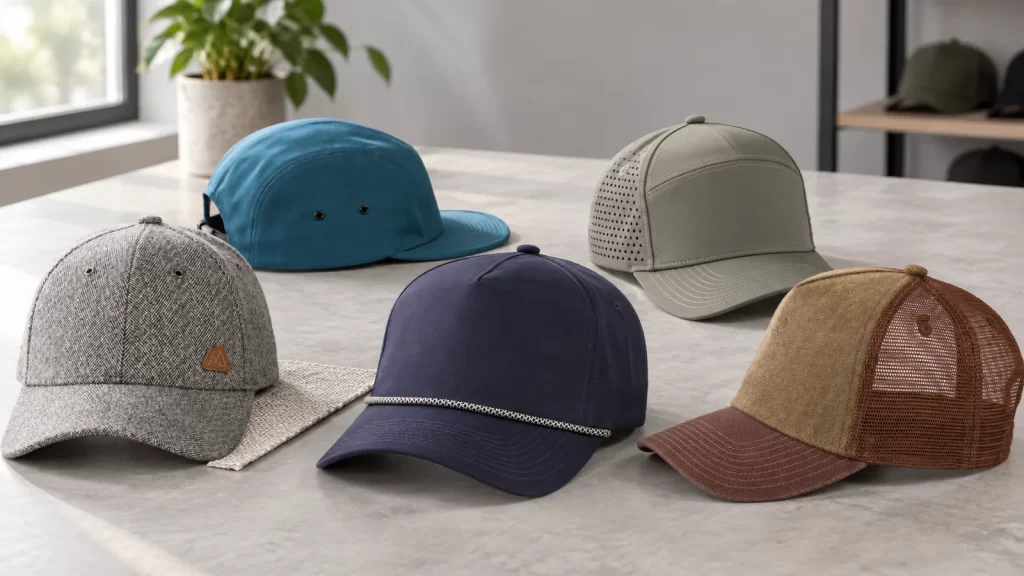
Custom headwear in 2026 is becoming more purposeful, tactile and audience-specific. Outdoor-inspired details, revived trucker shapes, golf and rope-cap styling, more thoughtful fit choices, and richer material or decoration textures are all worth watching. The opportunity for buyers is not to copy every visible trend. It is to identify the direction that fits the brand, then turn it into a cap that works in real use.
That distinction matters. A style can look convincing in a campaign image and still be wrong for the intended wearer, climate, price position or sales channel. This guide looks at five design directions appearing in 2026 headwear conversations and explains what to validate before moving from inspiration to a development sample.
Five custom headwear directions buyers are exploring in 2026
| Direction | Where it may fit | What to validate first |
|---|---|---|
| Outdoor and technical styling | Outdoor, travel and active-lifestyle ranges | Use case, comfort and evidence for any performance claim |
| Trucker and retro silhouettes | Lifestyle, event, workwear and merchandise programs | Crown shape, mesh, visor and logo scale |
| Golf and rope-cap styling | Golf, resort, club, team and leisure collections | Whether the rope, structure and branding feel like one product |
| Fit and closure choices | Any program serving a defined group of wearers | Crown depth, adjustment range, opening shape and wear feedback |
| Material and decoration texture | Retail-led and brand-focused collections | Legibility, hand feel, repeatability and overall design balance |
1. Outdoor styling is moving from costume to use case
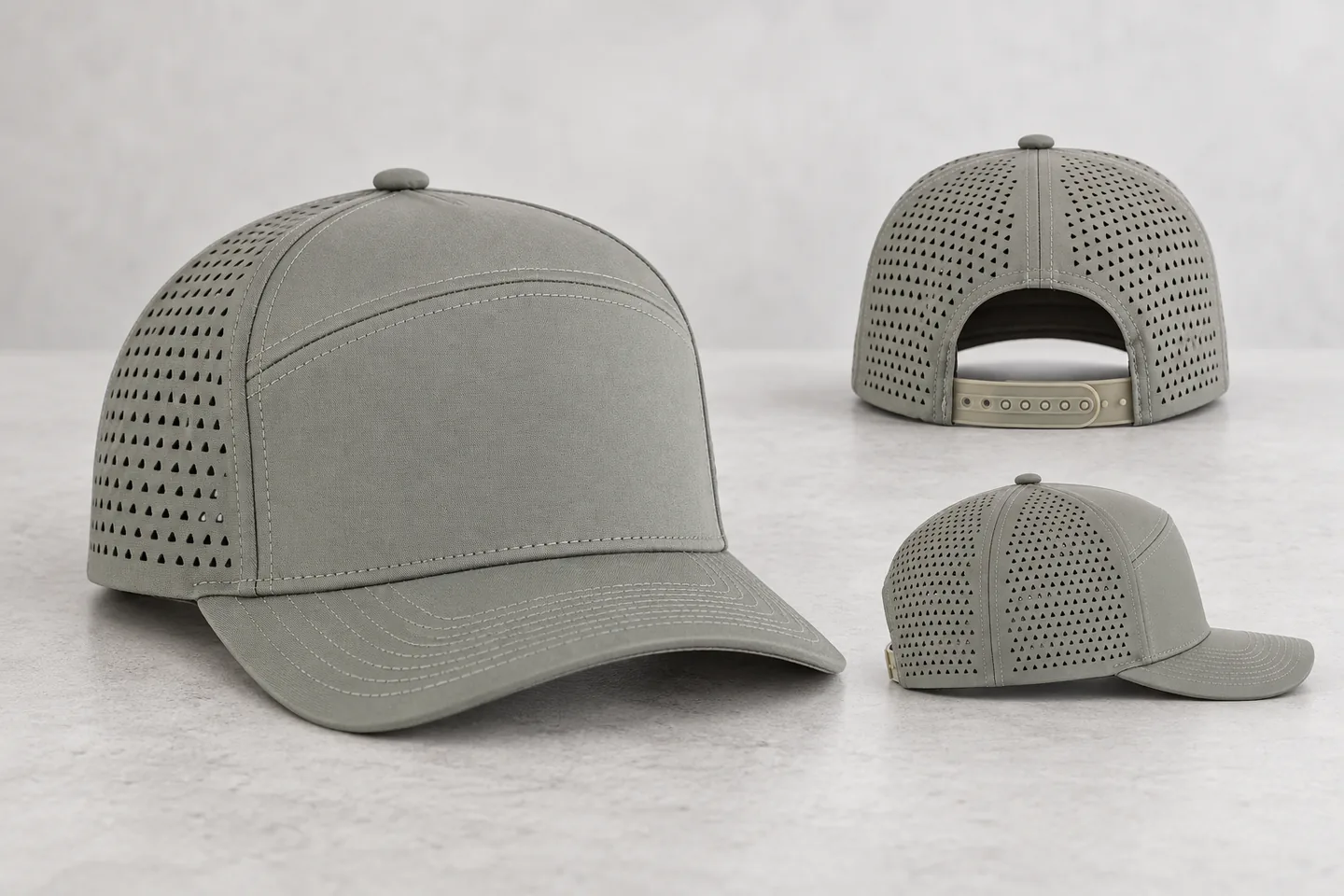
Outdoor influence is easy to recognize: lightweight-looking fabrics, ventilated panels, utility colors, cords, toggles and trail-inspired graphics. The strongest products, however, do more than borrow the appearance of technical gear. Their shape and components make sense for the way the cap will actually be worn.
A cap for a travel collection may need to feel light and pack easily. A cap intended for a summer event may place more emphasis on ventilation and all-day comfort. A fashion-led outdoor style may need the visual language without making any performance promise at all. These are different briefs, even when their moodboards look similar.
Buyers should therefore start with the activity, climate and expected wear time. Then review the fabric, crown construction, visor and closure as a complete system. Terms such as “waterproof,” “UV protective,” “cooling” or “moisture-wicking” should only be used when the relevant material or finished product has suitable evidence for the claim. The MasterCap outdoor collection can provide a visual starting point, but the final specification should come from the project’s actual use case.
For a more specific reference, the five-panel fishing cap with laser-perforated panels shows how a structured crown, stretch fabric, engineered ventilation and an adjustable closure can be considered together. It is an example of one resolved product combination—not a template that should be copied into every outdoor brief.
2. Trucker caps are returning in more than one shape
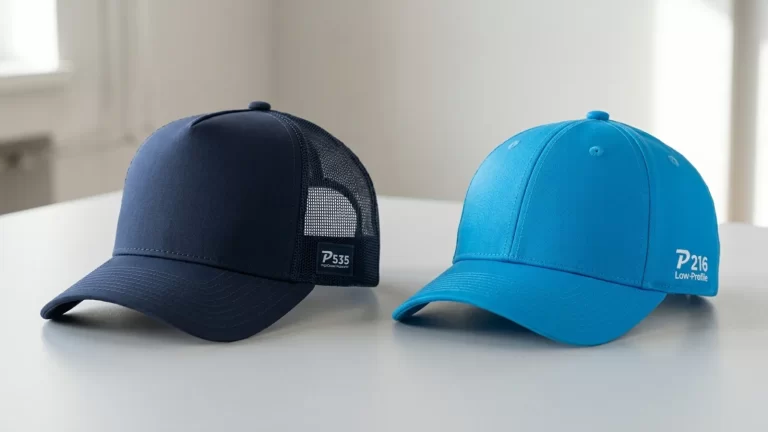
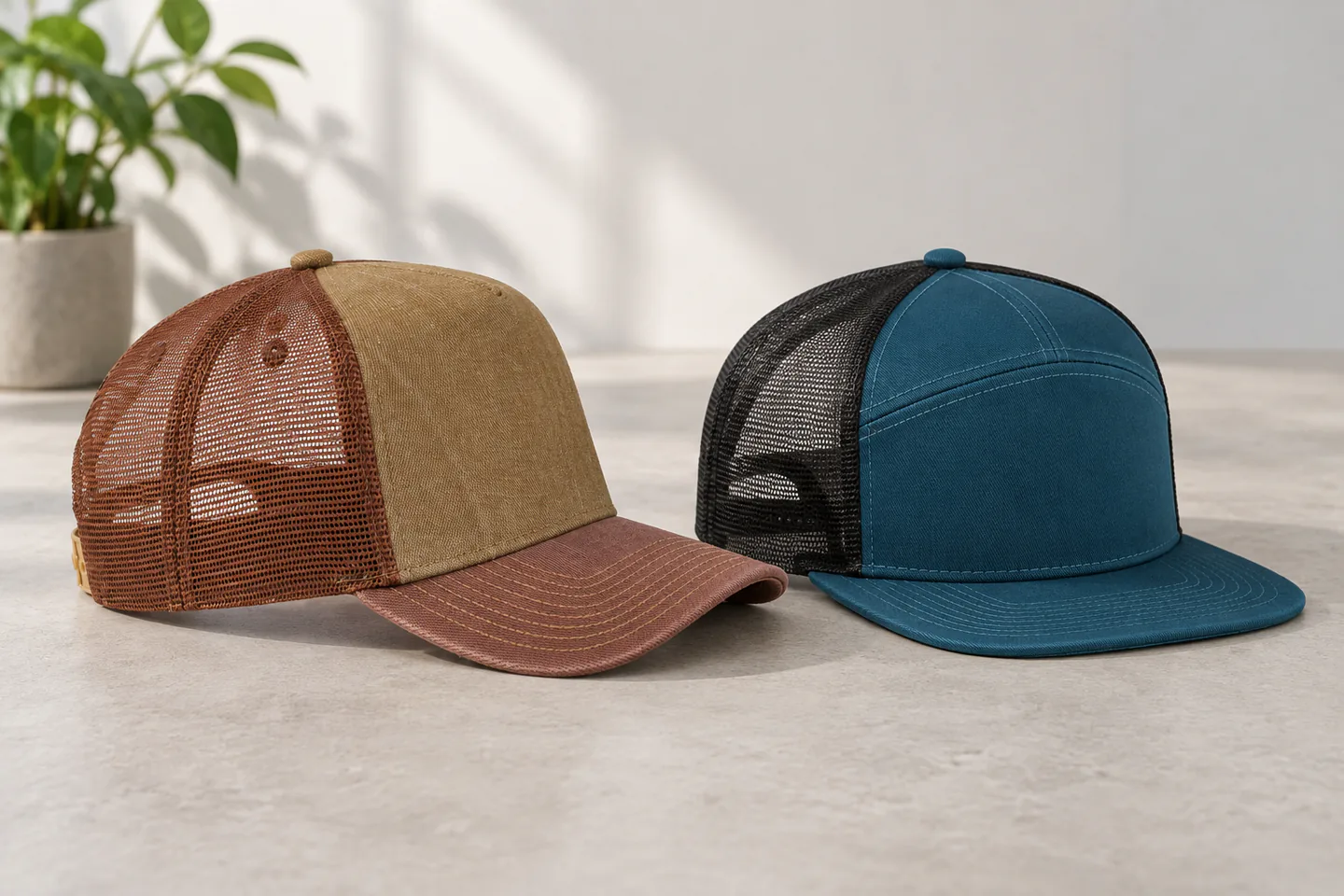
The trucker cap remains familiar, but “trucker” no longer describes one universal profile. A foam-front promotional cap, a structured high-crown mesh cap and a softer lifestyle version can create completely different impressions. Retro influence adds another layer: some brands lean into bold color blocking and period lettering, while others use washed color, a flatter visor or a quieter heritage reference.
For buyers, the silhouette should come before the artwork. Compare front and side views, crown height, front-panel stiffness, mesh color, visor curve and closure. A design that looks balanced on a low profile may feel undersized on a tall foam front; a large puff-embroidered logo and a small woven patch will also change the character of the same cap.
Use the shape and fit guide and the mesh-back trucker cap category to narrow the form first. Once the shape is right, test the branding at its intended production size rather than approving it only on a flat digital mockup.
The western trucker cap with a faux-suede visor and embroidered applique is one example of this approach. Its structured cotton-twill front, mesh back, tactile visor and layered decoration work as a coordinated retro direction; a different audience may need a cleaner or more contemporary combination.
3. Golf and rope-cap styling is broadening beyond the course
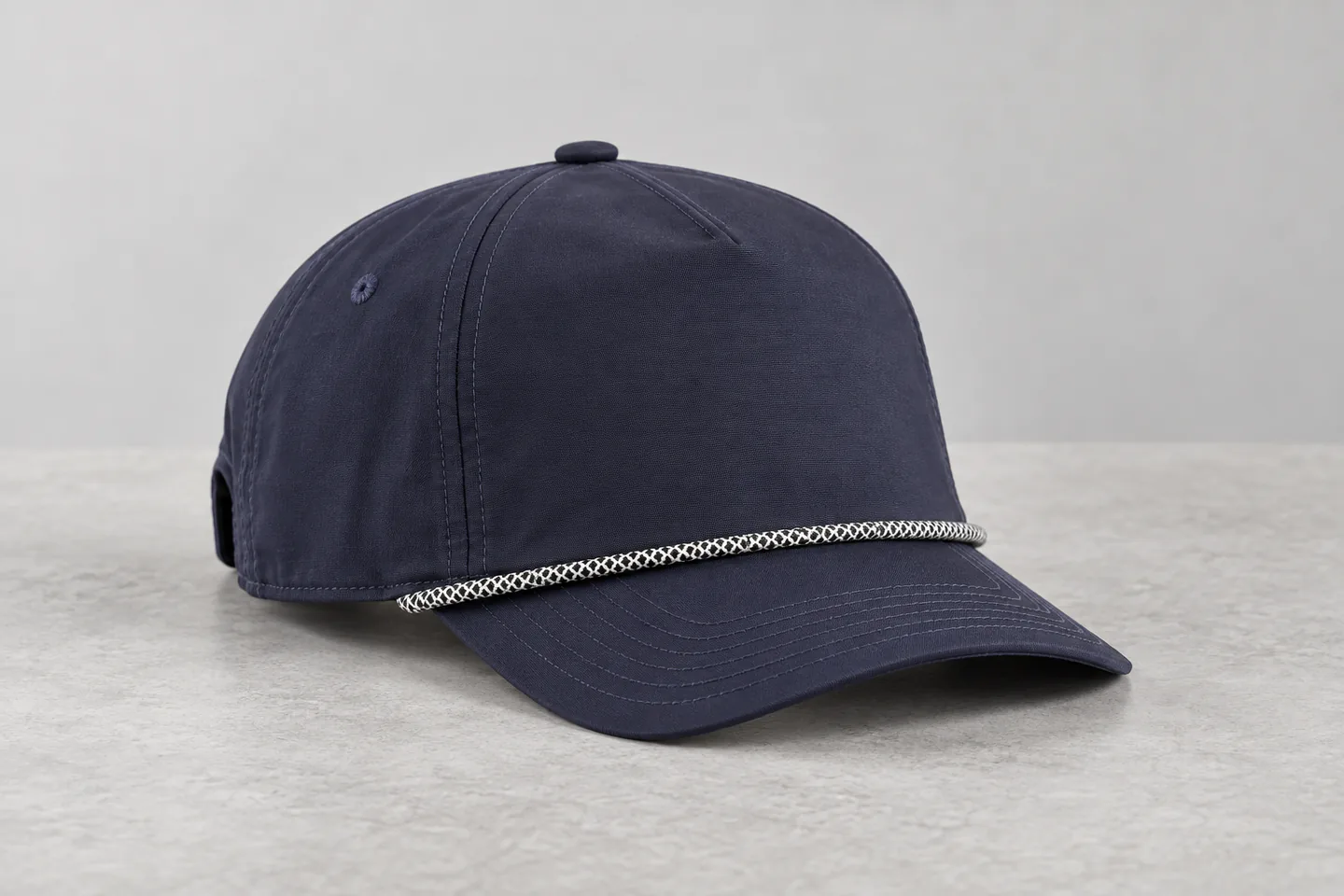
A rope across the visor remains one of the clearest golf and heritage signals in headwear, but the detail now appears in resort, club, team and lifestyle collections as well. That wider use gives buyers more freedom—and makes it more important to decide what role the cap should play.
For a traditional golf direction, a structured crown, restrained color combination and neatly scaled logo may feel appropriate. A leisure or resort program may support softer construction and a more playful rope color. An event cap may need a stronger front graphic that remains legible beside the rope. None of these is automatically the correct answer; the design has to feel coherent for its audience and channel.
During sampling, view the rope, visor, body fabric, closure and logo together under consistent lighting. Check how the cap feels during movement, not just on a display form. The MasterCap golf collection offers a wider range of references, while the five-panel golf rope cap with a silicone-transfer logo shows how rope color, a structured front, stretch fabric and dimensional branding can be reviewed as one design. Golf-associated styling alone, however, does not prove that every cap has sport-performance properties.
4. Better fit begins with a clearer picture of the wearer
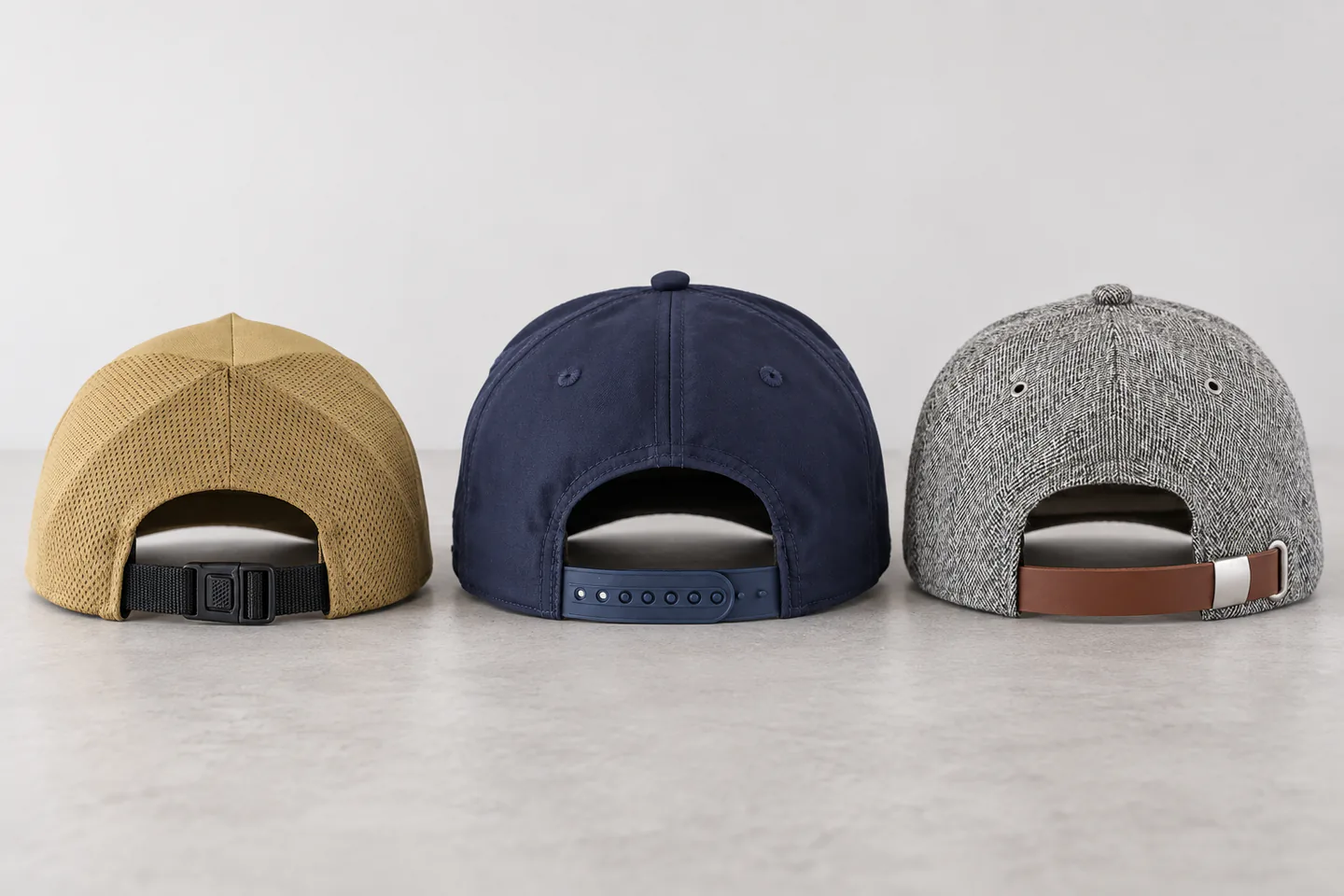
Fit is receiving more attention because brands are learning that “one size fits all” and broad gender labels reveal very little about comfort. Head circumference matters, but so do crown depth, hairstyle, the rear opening, pressure from the closure and the activity for which the cap is intended.
A useful brief describes the wearer rather than relying on a label. Who will receive or buy the cap? Will it be worn for several hours, during movement or mainly as a fashion accessory? Does the audience need an easily adjustable closure, a lower crown or more room around the rear opening? Those questions help a supplier recommend a relevant starting shape and help the buyer plan a meaningful wear trial.
For adjustable caps, record the usable adjustment range, crown depth, rear-opening shape and any pressure points. For sized or stretch-fit products, agree on the size assortment and measurement method. The MasterCap headwear size chart provides a planning reference, but sample feedback should still come from people who resemble the intended wearers. Specific comments—“the crown feels shallow,” for example—are more useful than “the fit is not right.”
5. Texture is giving simple caps more character
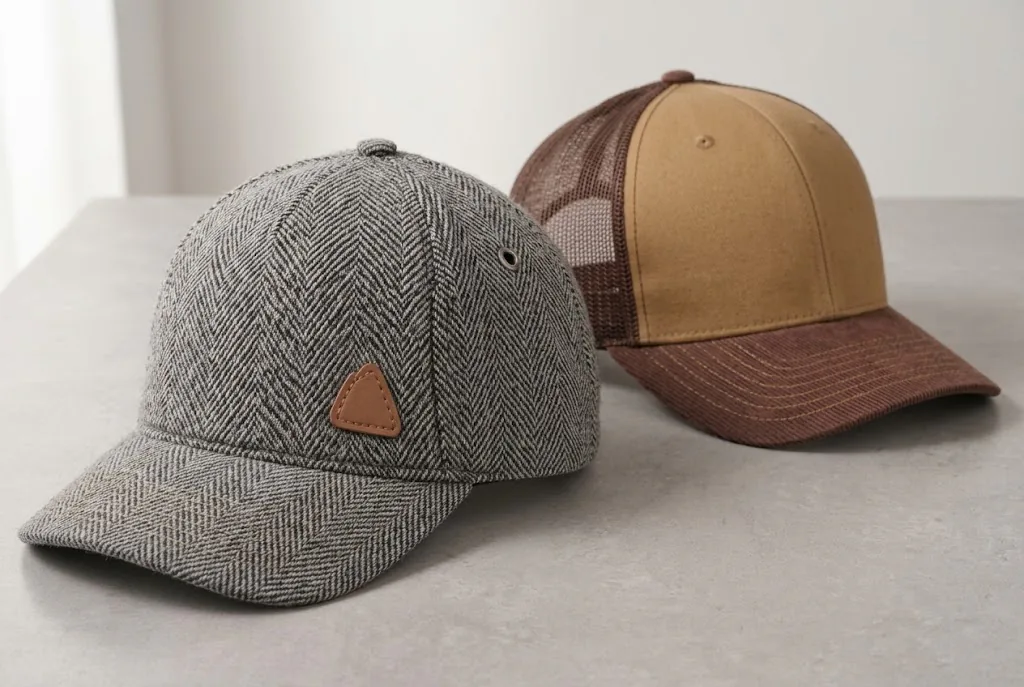
In 2026 ranges, much of the visual interest comes from texture rather than complicated graphics. Corduroy, distinctive mesh, washed surfaces, rope details, rubber patches, woven labels and mixed embroidery can make a familiar silhouette feel more considered. This can be especially useful for brands that want a cap to stand on its own instead of functioning only as a surface for a logo.
The risk is over-design. A textured fabric, contrast rope, multicolor patch and several embroidery techniques may all be attractive separately but compete when placed on one cap. For most projects, it is more effective to choose one or two features that support the brand story and allow the rest of the product to stay quiet.
Every material and decoration choice should be reviewed at actual size and on the intended cap construction. Fine lettering can lose clarity on a textured fabric; a heavy patch can change how a soft crown sits; colors can look different across fabric, thread and molded components. Feasibility depends on the artwork, placement, material, cap structure and sampling result, so a catalog example should be treated as inspiration rather than a production guarantee. Buyers can use the decoration guide to compare possible directions before preparing artwork.
What trend signals can—and cannot—tell a buyer
These five directions are supported by visible market signals, but no single source can tell a buyer what will sell. Pukka’s 2026 New & Now catalog, for example, shows technical-looking mesh, corduroy, rope details, retro color combinations and varied decoration treatments. Cap America’s Fall 2026 headwear article also discusses rope caps, outdoor and golf influence, tactile decoration and a more retail-oriented look. These are useful dated examples of what suppliers are presenting or observing—not proof of demand across every market.
Search and social data need the same care. Google explains that Google Trends shows normalized, relative search interest; it is not a poll or sales forecast. Pinterest’s 2026 trend report can reveal wider visual and cultural interests, but it cannot confirm demand for a particular cap in a particular channel.
The practical approach is to look for agreement between several kinds of evidence: search behavior, retailer or marketplace activity, wholesale inquiries, conversations with customers and the brand’s own sales history. Geography and time period matter. So does disagreement: if a style attracts social attention but produces little relevant customer interest, that is information too.
Turn the trend into a cap your team can evaluate
Once a direction feels relevant, the next step is not a bulk order. It is a clearer product question. Instead of asking whether rope caps are popular, a buyer might ask whether a structured rope cap suits a North American spring golf-retail program. Instead of requesting a “technical cap,” the brief might describe warm-weather travel, the expected wear duration and the specific claims—if any—that must be supported.
- Define the audience and use case. Record the geography, channel, season, price position and expected wearing situation.
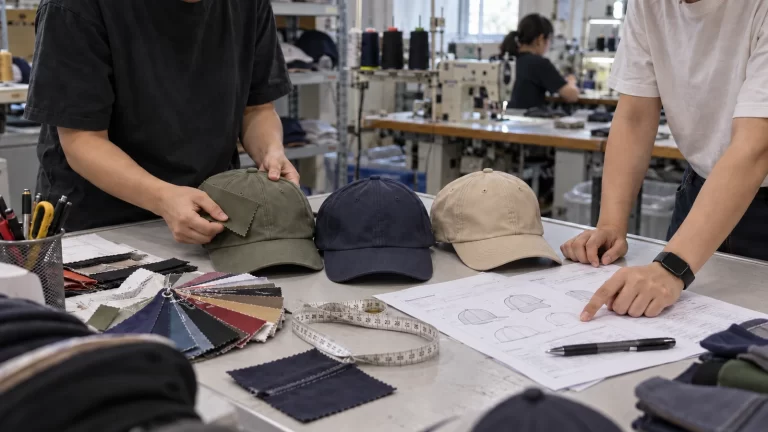
- Choose the design decisions that express the direction. Specify the silhouette, crown structure, visor, closure, materials, colors and decoration rather than relying on a trend label.
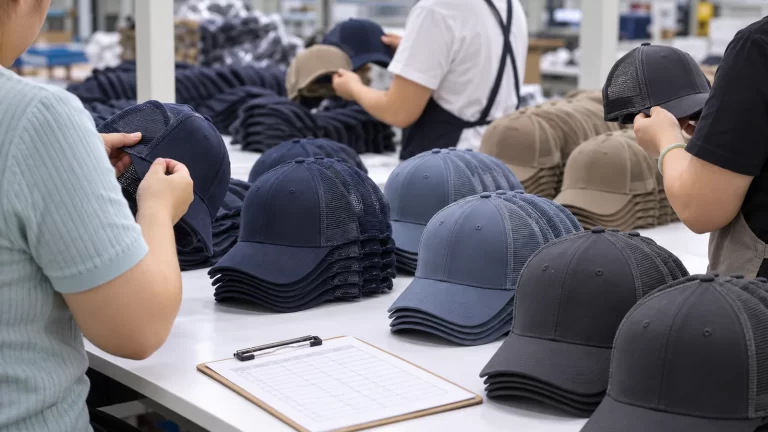
- Review the full sample. Evaluate appearance, fit, comfort and decoration together with the intended wearers and internal decision-makers.
- Decide what would justify moving forward. That may be sample approval, qualified buyer feedback, preorders or another measure appropriate to the program.
A useful RFQ should therefore include the target wearer, reference images, intended use, cap shape, material direction, decoration artwork and size, color references, quantity by style/color/size, destination, packaging needs and approval process. For standard MasterCap planning, the MOQ reference is 100 pieces per style, color and size, subject to material, process and full specification review.
If these details have not yet been organized, use the custom cap RFQ and supplier-comparison guide to prepare a comparable request before contacting potential manufacturing partners.
The best 2026 trend is the one that survives the sample
Outdoor cues, trucker shapes, rope details, improved fit thinking and tactile decoration can all produce relevant headwear in 2026. They can also produce a cap that feels generic or overworked if they are copied without a clear audience in mind.
The buyer’s advantage comes from selection: choose the direction that makes sense for the brand, define it precisely and let the sample reveal whether the idea works as a complete product. A trend becomes useful only when the complete cap works for the intended wearer, channel and product brief.
Frequently asked questions
What is the biggest custom headwear trend in 2026?
There is no single trend that is automatically biggest for every market. Outdoor styling, trucker and retro shapes, golf and rope-cap details, better fit choices, and stronger material texture are all visible directions. Their value depends on the intended wearer, region, channel and product brief.
Can Google Trends predict cap sales?
No. Google Trends shows relative search interest for selected topics, locations and periods. Buyers should use it with customer, channel and commercial evidence rather than treating it as a sales forecast.
When should a buyer contact a custom cap manufacturer?
Contact a manufacturer when the audience, use case, reference direction, approximate quantity, destination and approval needs are clear enough to discuss. The specification can still develop during sampling, but a focused starting brief leads to a more useful feasibility review and quotation.
Sources and review date
- Google — 15 tips for getting the most out of Google Trends
- Pukka — 2026 Custom Headwear & Apparel New & Now
- Cap America — Custom Headwear Trends for Fall 2026
- Pinterest Predicts 2026
Last reviewed September 28, 2026. Trend examples should be reviewed periodically as buyer behavior, product ranges and source material change.
Custom Headwear Support
Need help building your next cap collection?
Talk with MasterCap about OEM caps, sample development, materials, decoration options and production planning for your brand.